On Acoustics
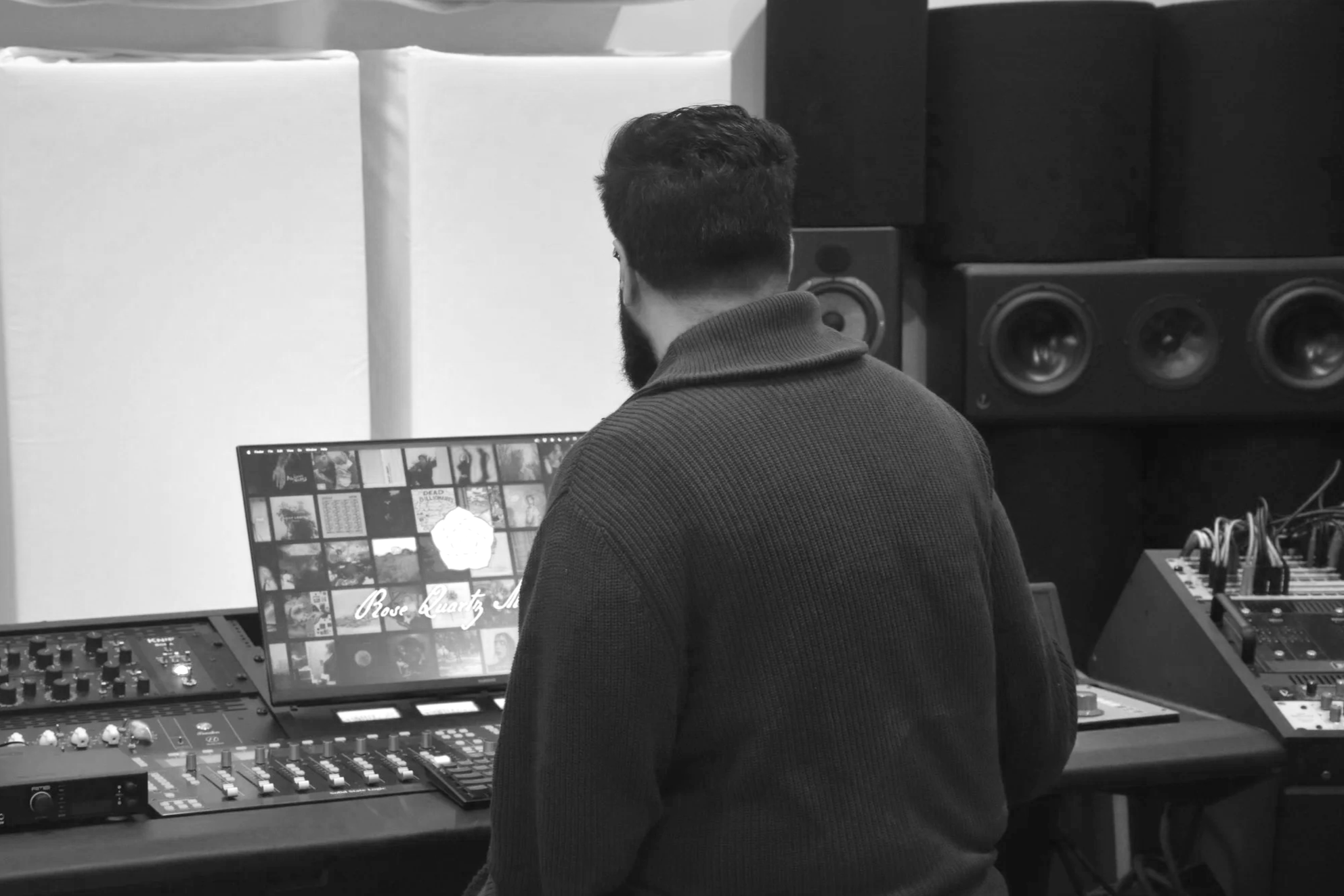
A room that requires heroic listening talent to produce records that translate well is a broken system. Broken systems fail eventually, not because of a lack of talent, but because the measure of one's talent is variable on a day-to-day basis, while the output of one's work has to be consistent.
I master hundreds of songs each year and have been doing so since 2018. There are days where my ears are razor sharp and days where they're not. That's just me being human. The key to consistently delivering masters that meet expectations is a function of whether one's listening environment punishes that variability or absorbs it.
What a Room Actually Sounds Like
Standing waves form between parallel surfaces. At the walls (pressure maxima), bass energy piles up. At the nodes, it cancels. Drag the listener to hear how bass response changes drastically with position — the room is imposing its own frequency response on everything you hear.
Early reflections arrive milliseconds after the direct sound. The ear can't separate them, so they smear transients, comb-filter the frequency response, and collapse the stereo image. First reflection points on the side walls, ceiling, and desk are the highest-priority surfaces to treat.
RT60 measures how long sound takes to decay by 60 dB. A long RT60 means the room rings after every transient, blurring detail and making it impossible to judge reverb tails in the music. A treated room decays quickly and evenly across the spectrum — short enough for clarity, controlled enough to feel natural.
Every enclosed space distorts what you hear. Understanding a few basic principles makes it clear why treatment isn't optional for critical listening.
Room modes are standing waves that form when sound reflects between parallel surfaces. At certain frequencies determined by the room's dimensions, these reflections reinforce each other, creating peaks (sometimes 10 dB or more) at some positions and deep nulls at others. Move your head two feet and the bass balance changes completely. That's not the music or the mix! That's the room’s dishonesty on display.
Early reflections are the short-delay bounces off nearby walls, ceiling, and desk surfaces that arrive at your ears just milliseconds after the direct sound. They smear transient detail, comb-filter the frequency response, and collapse the stereo image. Two inches of foam on a side wall addresses the highest frequencies of this problem and ignores the rest.
RT60 is the time it takes for sound to decay by 60 dB. This is the measure of how long a room rings after a sound stops. Too long, and everything blurs together. Too short, and the room feels unnaturally dead. The goal for a mastering room is a controlled, even decay across the full frequency range, short enough to reveal detail but natural enough to work in for hours.
These three problems: modes, reflections, and decay, are what acoustic treatment exists to solve.
OUR Approach to Treatment: Overabsorb, Then Revitalize
Most studios under-treat low frequencies. They put up a few 2" foam panels to address high frequency reflections that are easier to identify than bass peaks or nulls and maybe stick a 7" bass trap in a corner before calling it a day. That 7" bass trap does very little to address subbass imbalances. The room is still lying to them. Modes are still misrepresenting the low end, early reflections are still smearing the top end and stereo image, and every decision they make is a reaction to the room rather than to the music.
Our approach to bass and reflection management flips the script entirely. We absorb aggressively. Far more than conventional wisdom suggests. Then we use a combination of targeted diffusion and digital correction to restore precisely the acoustic energy we want.
The principle: it's much easier to add back what one has deliberately removed than to subtract only what the room is imposing.
The common concern with heavy absorption is that the room will feel dead, or lifeless and fatiguing to work in for long sessions. That can be a legitimate problem when absorption is applied carelessly. In our case, the diffusion elements and DSP restoration are specifically calibrated to bring back a sense of natural liveness without reintroducing the modal problems the absorption solved. The room feels present and comfortable to sit in for hours. It just doesn't impose itself on what we hear.
In practice, this means we control bass and reflections first through deep mass absorption, subsequently bringing back any overabsorbed frequency bands with DSP. The result is a listening environment where the room nearly disappears, and what we hear is solely the music and the mark we make on it.
The Treatment
Front Wall
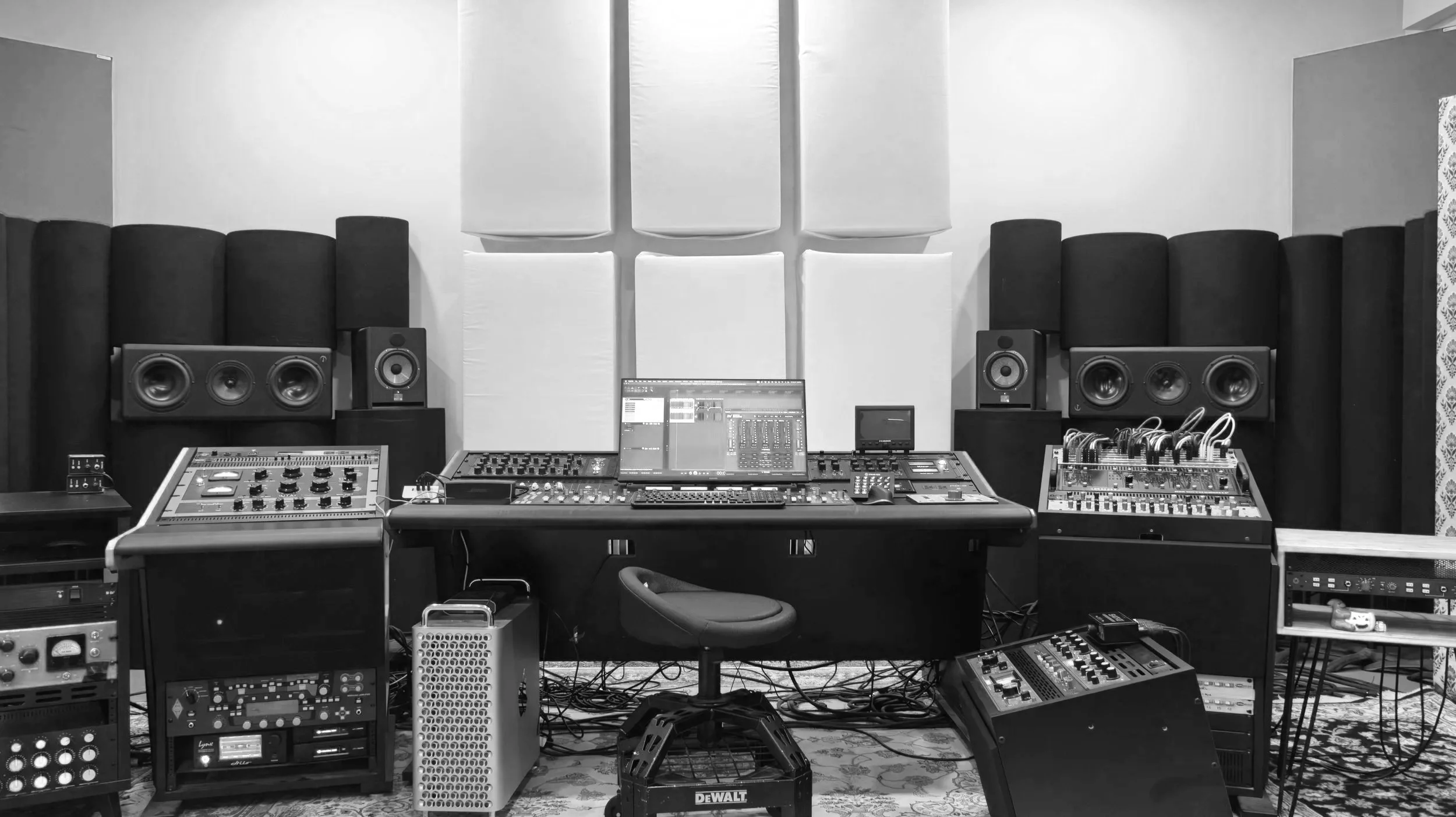
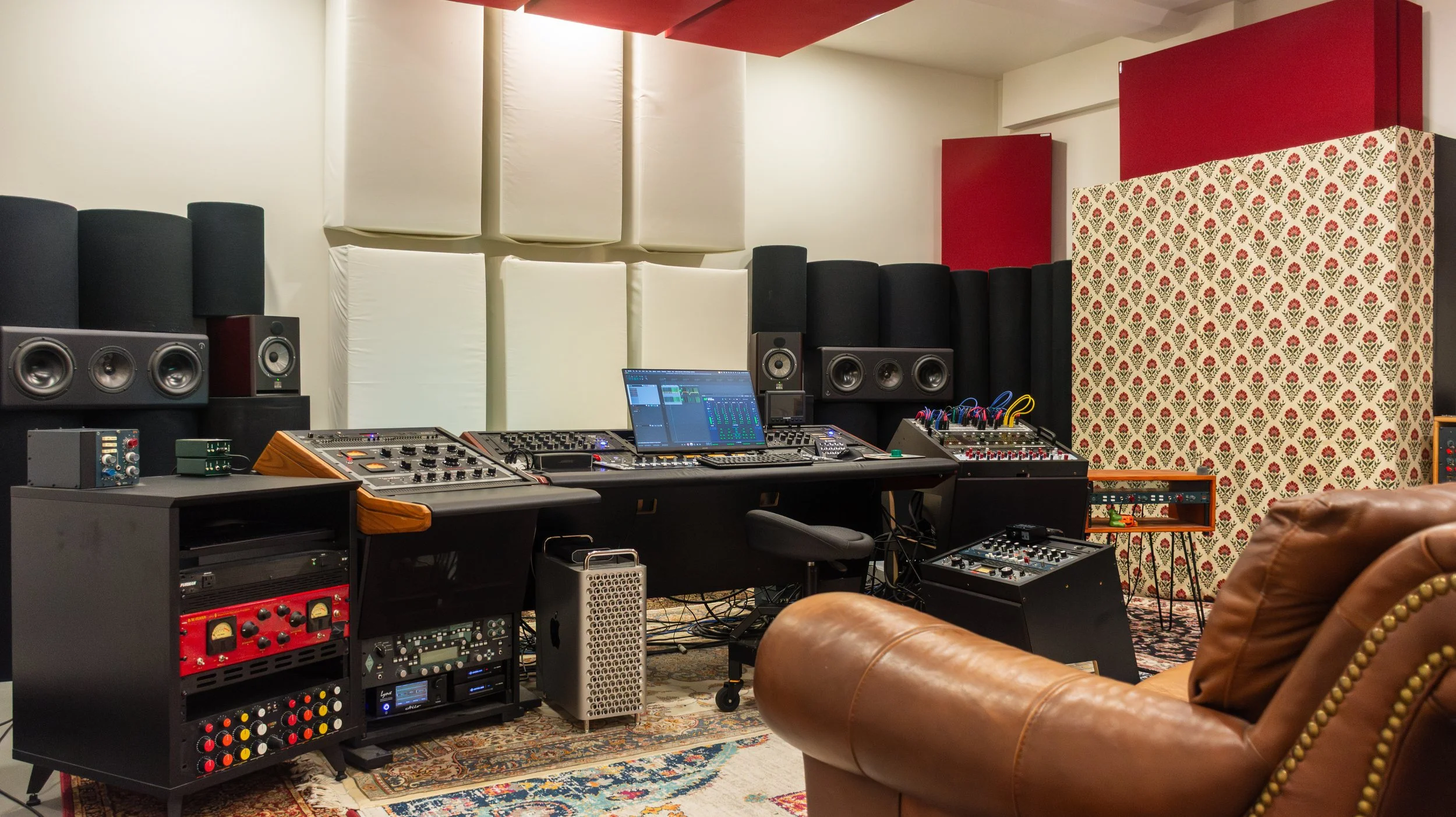
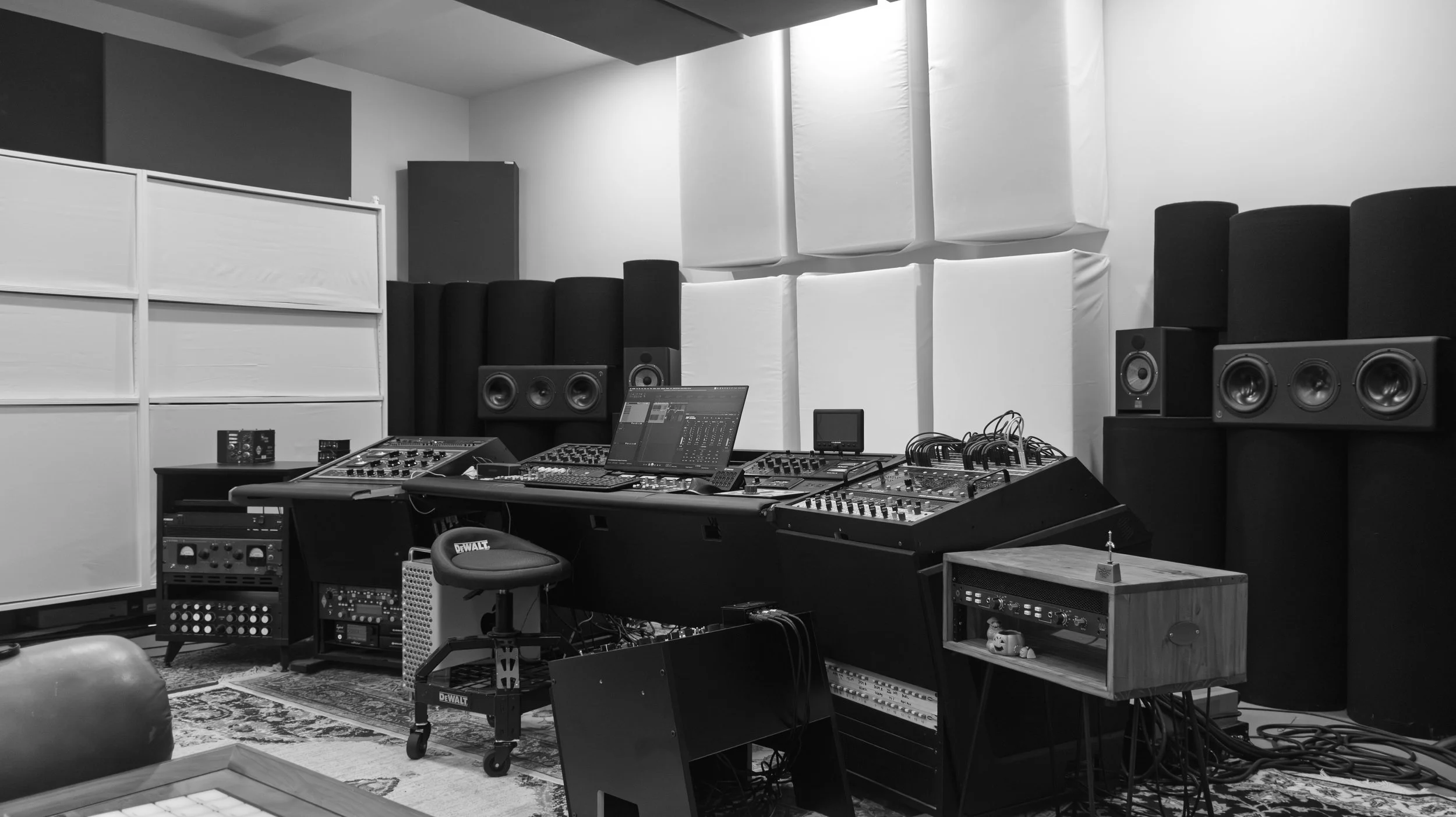
The front wall is a combination of ASC Attack Wall modules, ASC and GIK cylindrical bass traps (16"-20" diameter), and 16-inch-deep polyester broadband absorbers filling the space between them, running floor to ceiling. With 16” of depth, the polyester absorbs into the 50–70 Hz range. These are bass traps that happen to also handle mid and high-frequency reflections from the front boundary. The Attack Wall modules absorb early reflections immediately adjacent to the monitors while providing some structural framing for the treatment layout.
The monitors: Ex Machina Quasar Mk II placed within the Attack Wall modules, surrounded and supported by cylindrical bass traps, positioned based on best low-frequency response at the listening position.
Corners
Two PSI Audio AVAA C20 active bass traps, one in each front corner. These are a fundamentally different technology from passive absorption. The AVAAs present a low acoustic impedance at the room boundary, functioning as an active pressure sink effective down to approximately 15 Hz. Think of it like punching large holes in each corner, allowing bass to “leak” rather than pile up. The AVAAs attack modal energy through a completely different mechanism than the passive treatment, so the two approaches complement each other.
Combined with the deep passive treatment on every wall surface, we're addressing room modes from multiple directions and mechanisms to ensure a smooth bass response at the main listening position.
Side Walls
21-inch depth of Rockwool Safe'n'Sound at both first and second reflection points, running nearly floor to ceiling. At the top, doubled-up 7+ inch GIK Monster Traps bridge the gap from the side wall treatment to the ceiling, adding nearly 15 inches of absorption at the ceiling-wall junction.
This depth eliminates the side walls as meaningful reflective boundaries at first and second reflection points across the entire audible spectrum while providing substantial modal control from the lateral surfaces. It's the deepest treatment in the room, and it makes the largest audible difference.
Ceiling
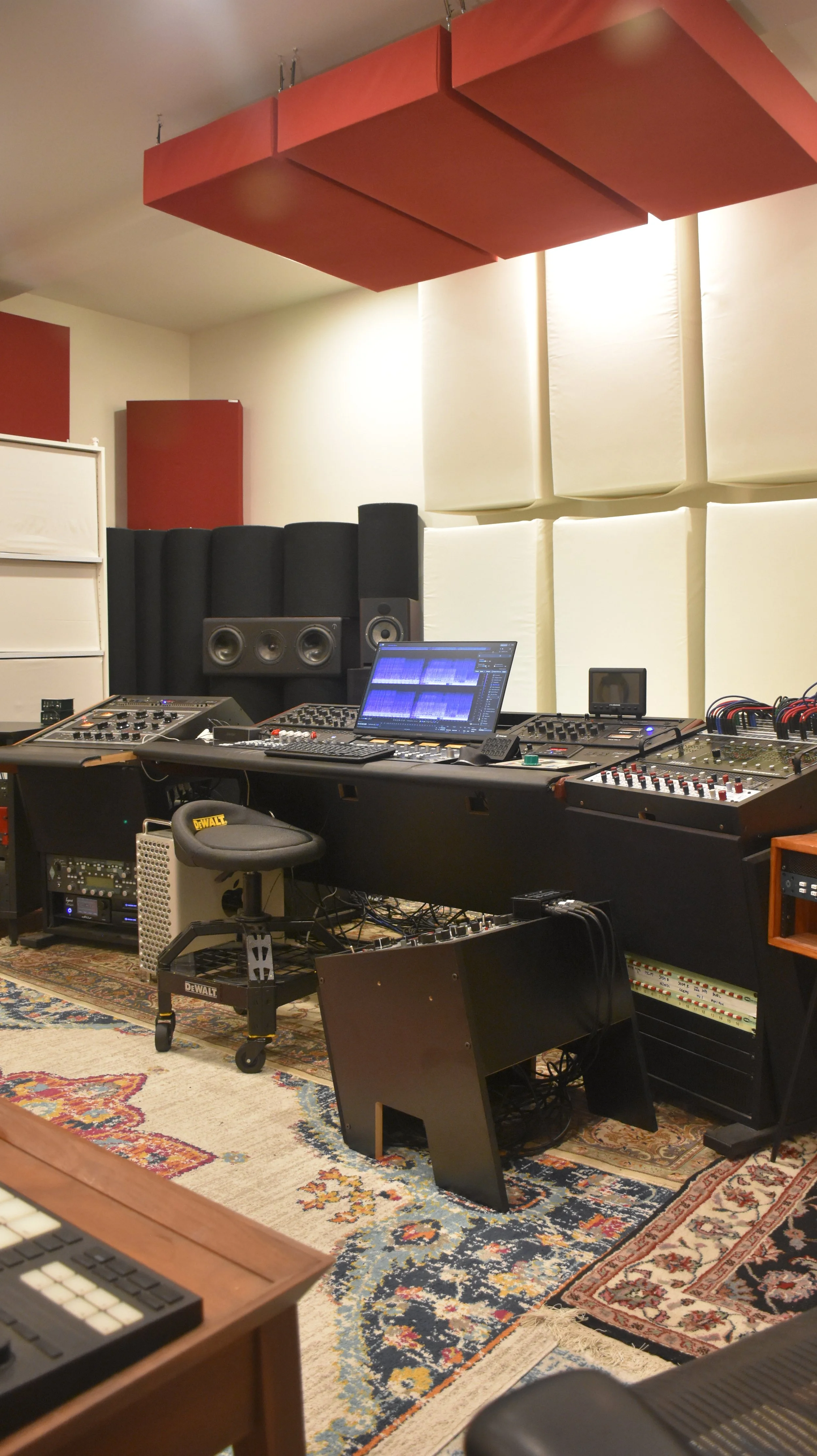
Three 7+ inch GIK Monster Traps serve as a cloud directly above the listening position, eliminating the overhead first reflection. At the ceiling-wall edges, the doubled GIK panels described above address the tri-corner pressure zones where the ceiling meets each wall.
Back Wall
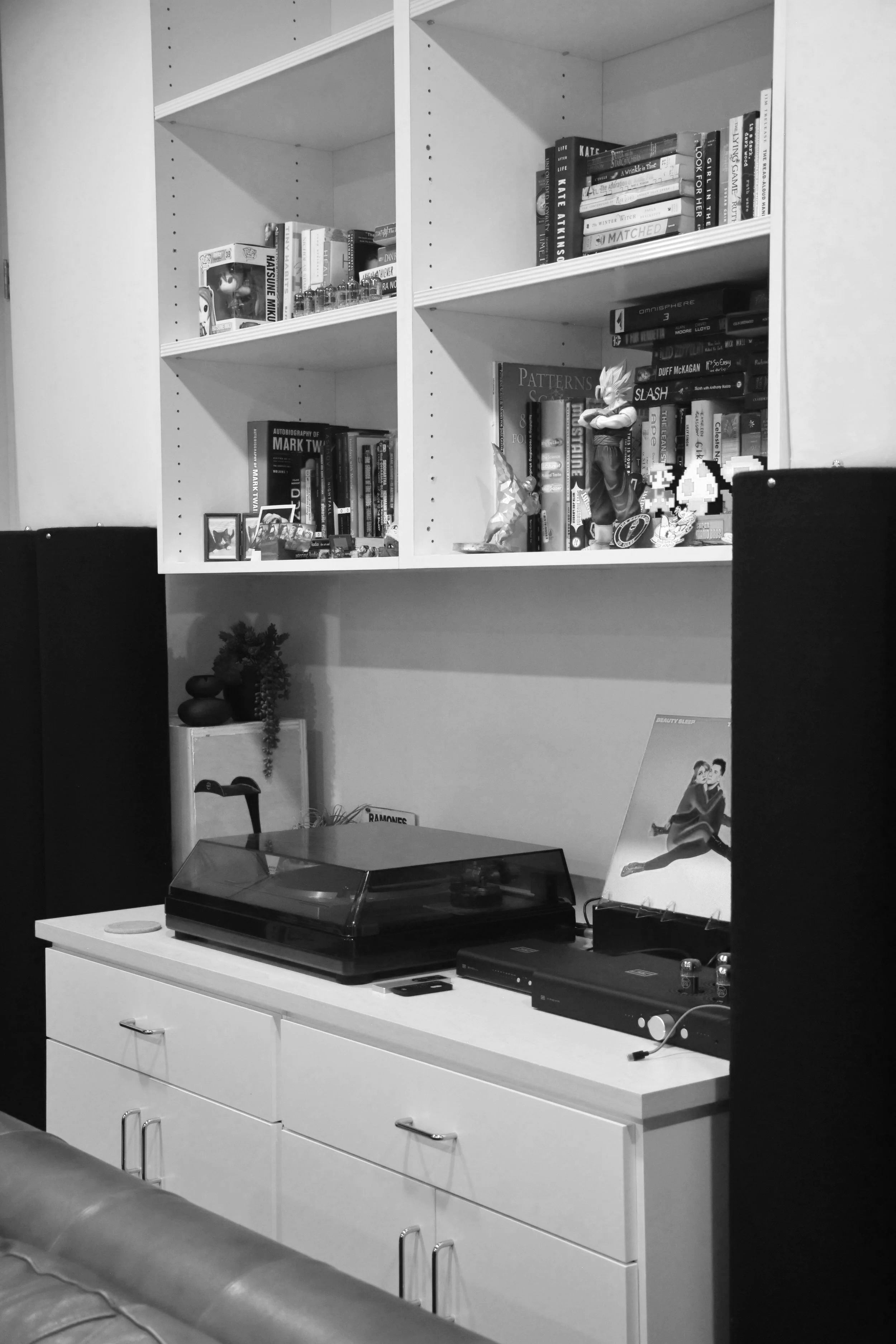
More 16-inch polyester absorbers tackle broadband absorption. Two sealed, tuned bass traps (custom boxes filled with absorption) target specific modal frequencies. ASC Attack Wall pieces set to their diffusion position provide a small amount of scattered energy. And a wall-mounted open-faced cabinet filled with books acts as a natural diffuser, breaking up mid and high frequencies with its irregular depths and varied surfaces.
Broadband absorption as the foundation, resonant absorbers for specific modes, and just enough diffusion to keep the room from feeling dead.
Digital Correction
Once the room is controlled passively, the DSP layer doesn't need to rescue anything, so it refines instead. We use a Trinnov Nova processor with an 8-point multi-measurement calibration, with the primary listening position as the time reference. The multi-point approach means the correction optimizes across the room as a listening zone rather than a single point in space, so the image and tonal balance hold up rather well off-axis.
By the time the Trinnov is doing its work, it's making gentle tilt adjustments and minor EQ moves — not fighting 10 dB+ room modes. That's the whole point of the passive-first philosophy. The less the DSP has to do, the more transparent and natural the result.
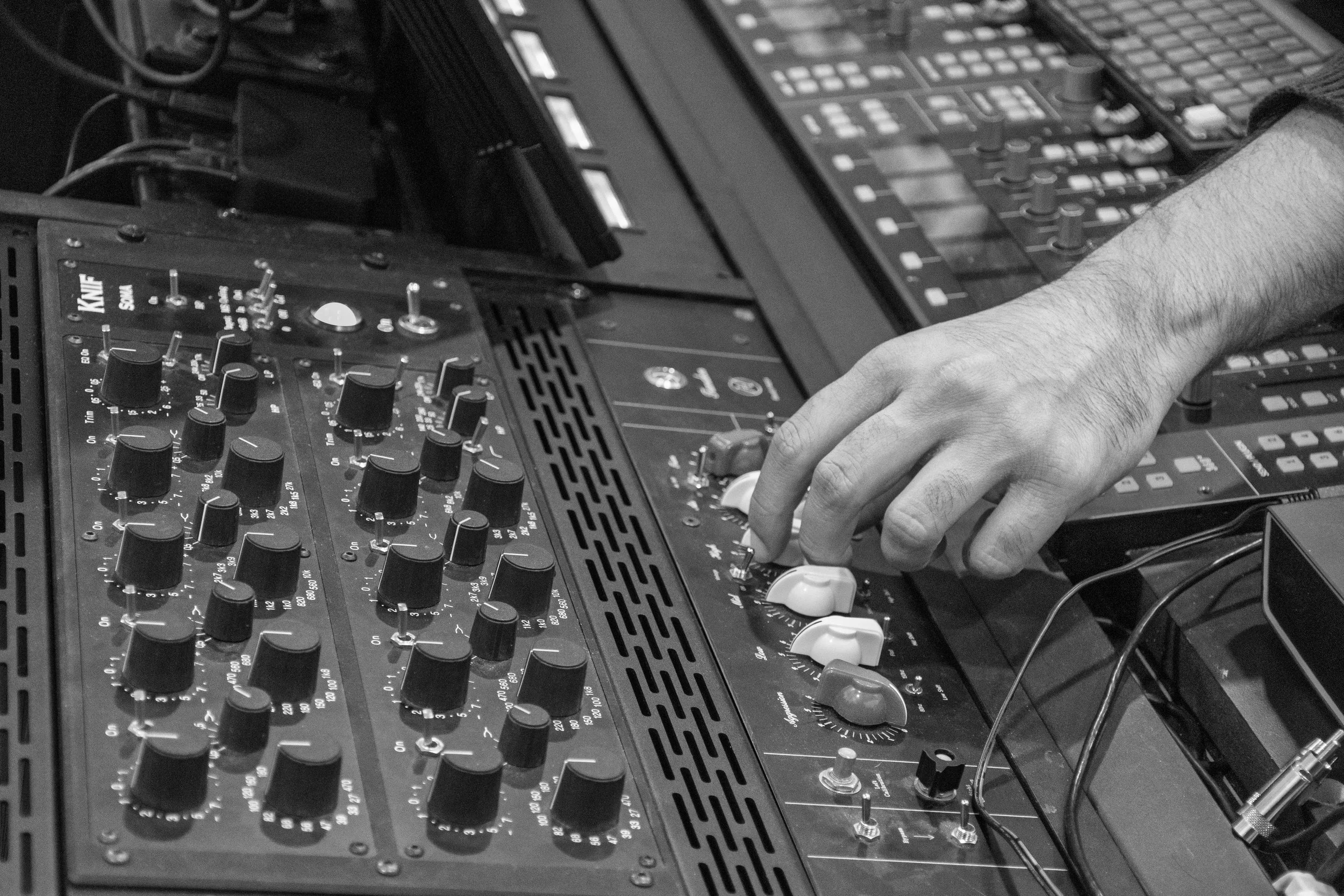
Our main monitors are Ex Machina Quasar Mk II. For secondary reference, we employ Focal Solo6 Be, both fed by a Cranesong Avocett IIA.
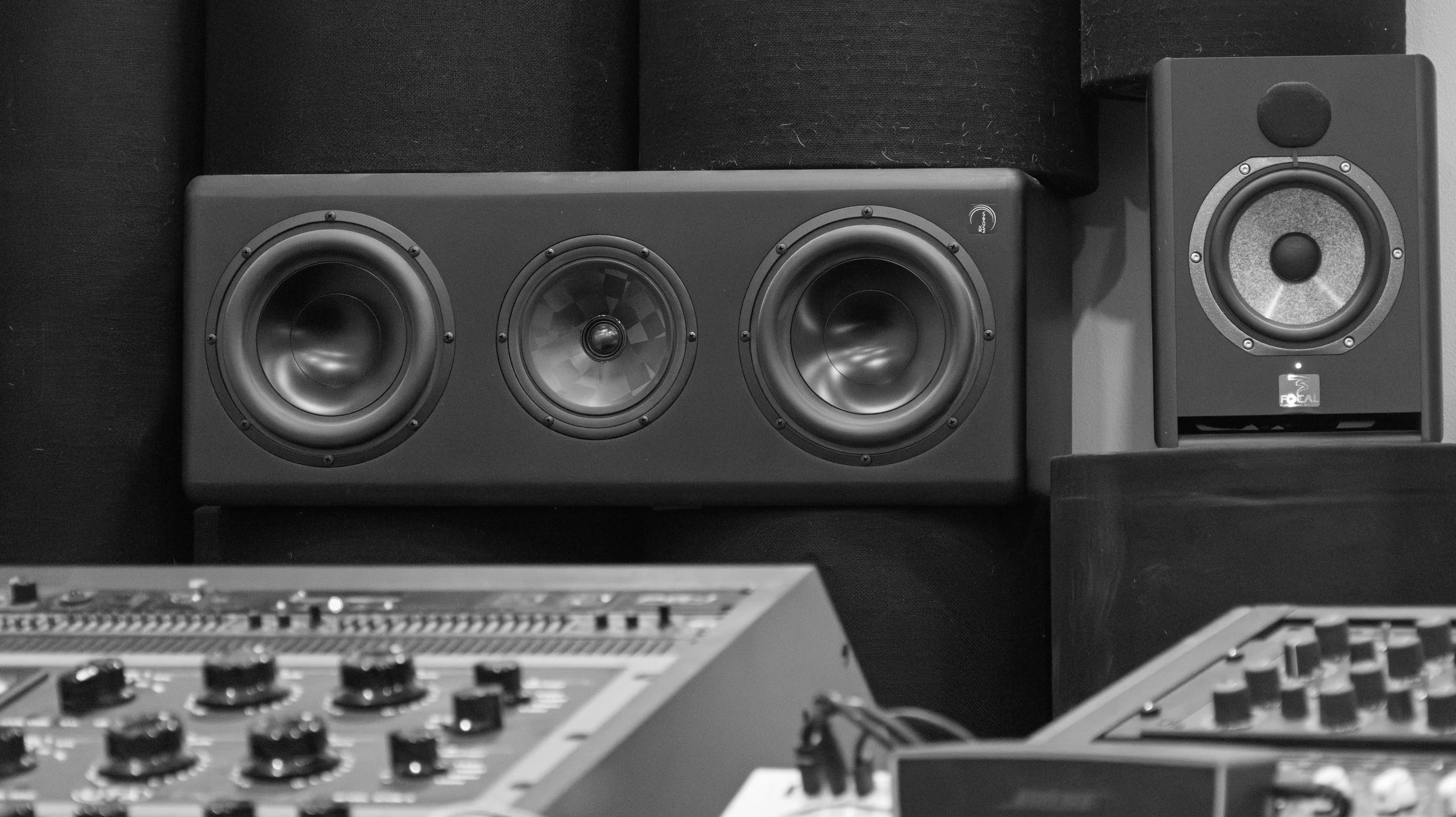
Our main monitors are Ex Machina Quasar Mk II. For secondary reference, we employ Focal Solo6 Be, both fed by a Cranesong Avocett IIA
Speaker Placement
The Quasar Mk IIs were placed based on best low-frequency response at the listening position. We measured multiple positions and chose the one where the interaction between the speakers, boundaries, and treatment produced the smoothest bass response before any correction was applied.
The listening position itself was determined the same way: measurements at multiple points along the room's center axis, evaluating low-frequency response below 300 Hz.
DO ACOUSTICS MATTER?
Every mastering decision we make — whether to bring out some warmth, tighten up the bass, push a vocal forward, or leave the mix alone — depends entirely on hearing the truth. If the room is adding 8 dB at 80 Hz, we'll under-process the bass and the master won't translate. If the side walls are smearing the stereo image, we'll make width decisions based on artifacts rather than the actual mix.
The depth of treatment in this space means those problems simply don't exist here. What comes in is what we hear, and what we do to it is what goes out. The experience of working in this room is one of ease. Decisions come quickly and confidently, not because of any special ability, but because the room isn't making us second-guess what we're hearing.